
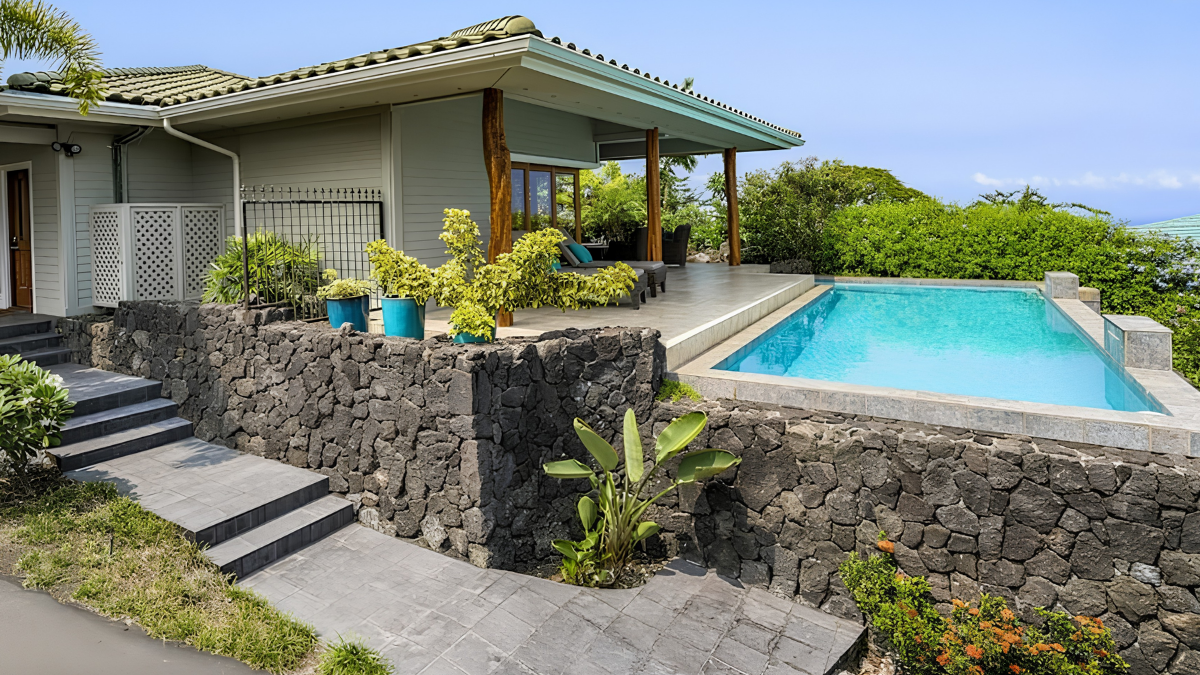
One of the most distinctive visual features of Kailua-Kona and the surrounding Big Island landscape is the widespread use of lava rock walls. From residential properties to resort boundaries and roadway edges, these dark volcanic stone structures are deeply woven into both the aesthetic and functional identity of the island.
But these walls are more than just architectural choices—they reflect Hawaii’s geology, cultural history, and practical adaptation to the environment.
Explore Kona real estate and lifestyle properties
The Geological Foundation: Living on Volcanic Land
The Big Island is the youngest in the Hawaiian chain and is still shaped by active volcanic activity. Much of Kona sits on ancient lava flows created by eruptions from Mauna Loa and Hualālai.
This geology directly influenced construction practices:
- Lava rock is one of the most abundant natural materials on the island
- Early settlers and builders used it for durability and accessibility
- The stone naturally integrates into the rugged terrain, making it ideal for landscaping and boundaries
As a result, lava rock became a practical and sustainable building material long before modern construction methods arrived.
Cultural Significance and Traditional Use
Beyond practicality, lava rock also holds cultural and historical importance in Hawaiian tradition.
Historically, stone walls were used for:
- Agricultural boundaries (especially in taro and dryland farming areas)
- Fishpond enclosures and coastal land management
- Property delineation within ancient Hawaiian land systems
These structures were built with intention and respect for the land, reflecting a deep connection between people, environment, and resource use.
Today, modern lava rock walls continue this legacy while blending into contemporary residential and resort design.
Why Lava Rock Walls Are Still Used in Modern Kona Homes
Even in luxury real estate developments, lava rock remains a preferred material due to its:
1. Durability
- Resistant to weather, salt air, and coastal conditions
- Long-lasting with minimal maintenance requirements
2. Natural Aesthetic
- Blends seamlessly with Kona’s volcanic landscape
- Enhances curb appeal for luxury properties
- Creates a sense of privacy without feeling artificial
3. Climate Adaptation
- Helps define outdoor spaces in open, tropical environments
- Provides wind resistance in exposed coastal areas
These qualities make lava rock both a functional and aesthetic asset in modern Hawaiian architecture.
From Rural Boundaries to Luxury Estates
Lava rock walls can be seen across a wide spectrum of properties, including:
- Rural agricultural land divisions
- Residential neighborhoods in Kona and Upcountry areas
- Luxury estates in gated communities and resort developments
In high-end real estate, these walls are often intentionally designed into landscaping plans, reinforcing exclusivity while maintaining a natural island feel.
A Defining Element of Kona’s Identity
Beyond construction and function, lava rock walls contribute to the visual identity of Kona itself. They represent:
- The island’s volcanic origin
- A blend of tradition and modern living
- A design philosophy rooted in natural integration
For many residents and visitors, these walls are one of the first visual cues that they are truly in a unique volcanic coastal environment, unlike anywhere else in the world.
Final Insight: Where Nature Shapes Design
In Kailua-Kona, architecture does not exist separately from the land—it is shaped by it. Lava rock walls are a clear example of how geography directly influences lifestyle, design, and real estate development.
They are not just boundaries or decorative features; they are a reflection of Hawaii’s natural history and cultural evolution, seamlessly integrated into both everyday living and luxury estates.